Thursday, 14 April 2022

Cannabinoid hyperemesis syndrome: A 6-year audit of adult presentations to a single ED in Melbourne


I'll preface everything by stating this paper is not high science.

Sorry…

These authors performed a retrospective chart review on adult patients who they thought had cannabinoid hyperemesis syndrome (CHS) in their single ED in northern Melbourne.

Obviously, the diagnosis of CHS is based on clinical findings. There is no blood test for CHS and no agreed formal diagnostic criteria. So, who knows if they identified all patients with CHS or if the ones they diagnosed truly had it?

Nevertheless, there might be a few useful pieces of information… so let’s continue on our magic carpet ride.

142 patients were included. 77 were unique presentations and the rest were frequent visitors.

I’m not going to report their clinical features as this formed part of how they identified patients in the first place… kind of an incorporation bias. (Suffice to say, they were vomiting a lot.) Plus, the retrospective nature of the data means a lot of things were probably not recorded (i.e. relief from hot shower was only written down 11% of the time).

More objectively, I was interested to see that most had elevated white blood cell counts and lactates. Median WBC was 14 (IQR 11.2-16.8) and lactate was 1.95 (IQR 1.4-2.9)

These doctors also liked droperidol and the authors go on to state, “Response to droperidol (or haloperidol) as previously reported may also guide clinicians in their determination as to whether CHS should be considered.”

Arguably the best part of the paper is their proposed CHUNDER score to aid in the diagnosis of CHS. This mnemonic stands for, “Cyclical vomiting, History of regular cannabis, Under fifty years old, Normal lipase, Diagnosis of exclusion, Elevation of CRP<50, and Reduction in symptoms after droperidol.

I’m chunder struck…


Covering:

Rotella J, Ferretti O, Raisi E, et al. Cannabinoid hyperemesis syndrome: A-year audit of adult presentations to an urban district hospital. 2022 Feb 23. doi: 10.1111/1742-6723.13944 [link to article]


Association of IV Contrast with Renal Function- A Regression Discontinuity Analysis


IV Contrast has been around for decades. How come we still do not know whether its causes renal damage!

Well, today is your lucky day…

These researchers conducted a randomized double-blind placebo-controlled trial of IV contrast in 2000 patients with borderline renal function to determine if there was any meaningful worsening in patient-oriented outcomes.

Just kidding!

There are limits in conducting clinical trials… the biggest of which boils down to ethics and feasibility. Sometimes, an RCT is not going to happen. So, we are stuck with observational studies which have the inherent trouble in dealing with confounding and attributing causality.

In an attempt to overcome these limitations, these researchers performed a regression discontinuity design (RDD).

Huh?!?

The RDD relies upon the existence of a continuous variable (i.e. D-dimer) for which there is a cut-off that determines treatment or investigation. Patients on either side of the cut off have much different probabilities of investigation but probably are reasonably matched for confounding factors.

Pretty clever…

These researchers included adult patients who had a D-dimer test during an ED visit over a 5-year period in the province of Alberta, Canada. They compared the group that had elevated D-dimers vs. those that were normal. The primary outcome was long term renal function (up to six months from ED visit).

Results?

150,028 patients met inclusion criteria. Mean baseline eGFR was 86.

There was no evidence of renal damage with a change of eGFR of only 0.4 (95%CI -4.9 to 4.0) up to 6 six months later.

The authors conclude; 

“To our knowledge, this study provides the strongest evidence to date that intravenous contrast is not associated with significant kidney injury…”

This overall conclusion is correct. But... we are not worried about patients with near normal renal function to start with. We are much more interested in the cohort that has borderline function.

They tried a subgroup analysis by looking at patients with eGFR <45 but state that the analysis was hindered by missing data and small numbers. This is unfortunate.

What should we conclude?

Overall, the modern IV contrast agents probably don’t do much to kidneys. But we are not entirely sure in the cohort with more severe baseline renal impairment.


Covering:

Goulden R, Rowe B, Abrahamowicz M, et al. Association of Intravenous Radiocontrast with Kidney Function. A Regression Discontinuity Analysis. JAMA Intern Med. 2021;181:767-774. [Link to article]


Saturday, 9 April 2022

Rapid agitation control with ketamine in the ED: A Randomized Controlled Trial


Agitated patient tearing apart the ED...? Which IM medication do you give?

These authors from a single ED in Vancouver randomized patients to either ketamine 5mg/kg IM vs. midazolam 5mg plus haloperidol 5mg IM.

Their primary outcome was time to adequate sedation as measured on a validated agitation score.  

(They tried to blind the dose but it’s hard to blind ketamine when we all know what it looks like. Either way, this was probably only a minor source of potential bias.)

Results?

Enrolment was cut a bit short at 80 patients due to the start a supposed global pandemic.

Median time to adequate sedation was 6 minutes in the ketamine group vs. 15 minutes in those randomized to midazolam/haloperidol. 

So, ketamine is the clear winner?!?!

There are two major reasons why this conclusion is wrong.

Firstly, they compared a grizzly bear dose of ketamine to a low dose of midazolam & haloperidol. For what it is worth, I usually start with midazolam 10mg and droperidol 10mg (unless there is reason to start lower… elderly, co-morbid, etc.) Droperidol works faster than haloperidol.

Secondly, they asked the wrong research question. I care less about how quickly someone is sedated and care much more about how well it works overall.  I’m sure a dose of IM sux would work pretty quick too. Or even a bullet to the head would have an immediate calming effect (but would be associated with excess mortality.)

How often did the ketamine group require re-sedation? How well did the patients wake up? Lots of adults complain about side effects of ketamine including dysphoria to emergence phenomenon. But what could go wrong with giving an agitated patient a medication similar to PCP?

To be fair to the researchers, it is difficult to objectively measure, “how well did it work?” It's complicated and there is some subjectivity in this question. Time to sedation is much easier to measure… but just because we can measure something accurately does not necessarily mean it is important. (This kind of reminds me of the streetlight effect).

In short summary, I’m willing to believe a big slug of ketamine will cause someone to drop quickly. But is this the best thing for the patient? I doubt it.


Covering:

Barbic D, Andolfatto G, Grunau, et al. Rapid Agitation Control with Ketamine in the ED- A Blinded, Randomized Controlled Trial. Ann Emerg Med. 2021;78:788-795 [link to full text article]


The erector spinae plane block for acute pain management in ED patients with rib fractures


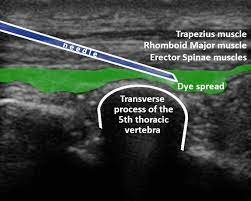
The erector spinae plane block provides analgesia for rib fractures. It is similar to 3 in 1 blocks that we are comfortable performing for femoral neck fractures. It requires ultrasound guidance and high volume (30-40ml) of dilute anesthetic to allow the medication to spread below a fascial plane. 

For a decent video demonstrating the block, check out: https://www.youtube.com/watch?v=O9RB0K7f8pM

Interestingly, the block was only just described in the anesthesia literature in 2016 but it has already become quite the rage.

Why? It is simple, effective and the incidence of complications is felt to be low.

However, it looks like it hasn’t really made its way into the Emergency Department.

Enter two Canadian emergency doctors who published a case series of 9 patients. Ok… a pilot study and not great science.

The mean reduction in NRS pain scores went from about 10 to 3.5. So, it seemed to work pretty darn well. Of course, they cannot make any claims about safety, but other literature has somewhat addressed this.

The authors appropriate state that more research is needed but they “feel that the erector spinae plane block should be considered in patients with acute rib fracture pain as a method of pain control in multi-modal analgesia.”

I think this is probably a fair conclusion. We perform a multitude of blocks in the ED. With appropriate training, this can probably be added to our armamentarium.


Covering:

Surdhar I, Jelic T. The erector spinae plane block for acute pain management in emergency department patients with rib fractures. Can J Emerg Med. 2022;24:50-54. [link to article]


Tuesday, 23 November 2021

Dexamethasone in hospitalized patients with COVID-19


Prior to the publication of this study, there was quite a lot of debate about the efficacy of dexamethasone for hospitalized patients with COVID. 

But not now…

The RECOVERY trial was designed to quickly look at many potential treatments for COVID. A whopping 176 NHS organizations in the UK were involved and with no shortage of patients to enroll.

Hospitalized patients with COVID were randomized to get either 6mg of dexamethasone daily for 10 days or usual care alone.

Primary outcome was all cause mortality at 28 days. There were lots of prespecified secondary outcomes.

6425 patients were recruited from March to June 2020. Overall, 22.9% of patients in the dexamethasone group died vs. 25.7% in the usual care arm. Absolute difference of 2.8% for a number needed to treat (NNT) of 36.

But the benefit seemed to be best in the sickest patients that were ventilated; NNT 8. There was a trend towards harm in the healthier group not requiring oxygen.

There are some limitations to this study, the biggest being our care of COVID has changed since it was conducted, care was not standardized, and this was an unvaccinated cohort. Nevertheless, it was generally well performed and (for now) it is considered practice changing.

Dexamethasone is no “magic bullet” but another piece of the puzzle that might provide some benefit to those sick enough to be hospitalized with COVID. However, no therapies have come even close to the benefits we see with vaccination.

Get ‘em all vaccinated!


Covering:

The RECOVERY Collaborative Group, Dexamethasone in Hospitalized Patients with COVID-19. N Engl J Med 2021;384:693-704. [link to full text article]


Tuesday, 19 October 2021

MRI of cervical spine in trauma: A retrospective single-centre audit of patient outcomes


In patients with a normal cervical spine CT but persistent tenderness or neurology, how often is a subsequent MRI abnormal? And what happens afterwards? Here's an answer from Gelong...

(Spoiler alert... the real question should be, "does MRI find occult injury that results in genuine improvements in patient-oriented outcomes? Or does it cause harm from overdiagnosis?")

These authors from a single centre, looked retrospectively at a cohort of trauma patients that had both a negative cervical spine CT and a subsequent MRI. (Adult patients had to be alert and <72 hours between the studies.)

Results?

228 patients were included.

Of the 181 patients that had the MRI for persistent tenderness, 35 (20% or one-in-five) had an abnormal MRI. Of those, 14 were treated with a rigid collar and no patients underwent surgery.

Of the 47 patients that had the MRI for neurological findings, 11 (23%) had an abnormal MRI. Four patients were managed with collars. Two patients required surgery and the manuscript described their presentation & hospital course. Their neurologic issues were not subtle.

The authors appropriately conclude that the MRI is of “questionable” utility in those without neurology.

But could the MRI be even worse? Could it identify injuries that would heal just fine had we never found them only to subject patients to weeks of unnecessary immobilisation, discomfort, and potential harm? Unfortunately, this was not really addressed in this study.

With technology advances, MRI will only get more sensitive at finding “abnormalities." In addition, MRI will become more readily available. We need to have some serious discussions; just because we can, should we? 


Covering:

Foster G, Russel B, Hibble B, et al. Magnetic resonance imaging cervical spine in trauma: A retrospective single-centre audit of patient outcomes. Emerg Med Aus. 2021 Sep 3.doi: 10.1111/1742-6723.13842. [link to article]

Sunday, 17 October 2021

The effectiveness of intradermal sterile water injection for low back pain in the ED: A prospective, randomized controlled trial


Intradermal water injection to alleviate low back pain?

Believe it or not, water injection has been around for many years, especially in the delivery suite. There are some proposed mechanisms as to why or how it might work.

But can water injection work in the Emergency Department?

These authors from a single center in Turkey, randomized low back pain patients who all got IV NSAIDS to either intradermal water injection or nothing else.

Inclusion criteria were adults 18-65 years old with a VAS pain score of >4. They excluded trauma, chronic back pain, those that had pain medications prior to arrival, diabetes, or BMI >30.

Outcomes were reduction of pain at 10, 20, 30 minutes and 24 hours. They also looked at patient satisfaction, need for rescue medication, etc.

Results?

112 patients enrolled and the water worked FANTASTIC! Everything they could measure was better.

Hallelujah… we have a miracle!

Unfortunately, there are some serious problems with this study.

The manuscript is awful and serves as a red flag as to the professionalism and conduct of these researchers. I would have genuinely believed that they used Google Translate and submitted a draft without changes. But there are words in the manuscript that don’t even exist on Google!

Regardless of the sloppy manuscript, there are serious methodological issues that likely render the conclusions invalid.

It was not blinded.

Of course, patients were not blinded, but nor were the clinicians in the study who also collected the outcome measures. This could have resulted in substantial subject and observer bias.

And of course, there is the placebo effect…

(But to be fair to these researchers, what is the placebo for water? Or how can you perform sham water injection? I don’t know.)

In short summary, this terribly presented paper’s findings are very likely due to bias and placebo effect.

But is it unethical to use undisclosed placebo? Holy hallelujah can of worms…


Covering:

Tekin E, Gur A, Bayraktar M, et al. The effectiveness of intradermal sterile water injection for low back pain in the emergency department: A prospective, randomized controlled study. Am J Emerg Med 2021;42:103-109. [link to article]